



From habitat protection to species conservation programmes
The priority tasks of Duna-Drava National Park Directorate include both the protection of habitats and species, as well as habitat rehabilitation activities. The following are some examples, not an exhaustive list of course, to provide an insight into this diverse activity.
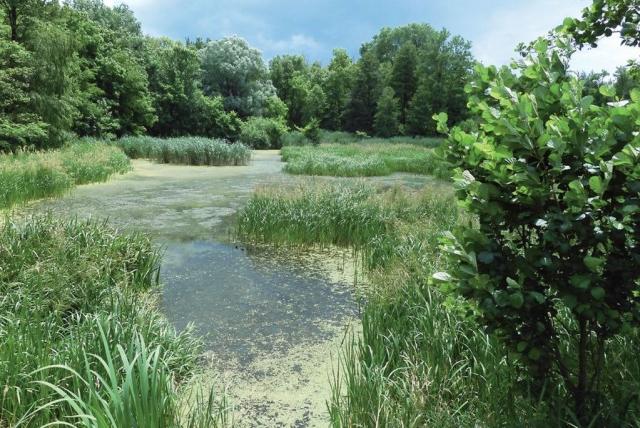
- Habitat protection – each habitat type is home to different protected and strictly protected plant and animal species, ranging from the Banat peony to the black stork. Among others, this is one reason why it is necessary to think and act in this dimension.
- Protection of wetland and aquatic habitats – side-arms and backwaters of the Danube and the Drava, the valley bottoms and artificial fish ponds of the hilly areas, the marshes, alder bogs and tussock associations between the sand hills typical of Inner-Somogy.
- Protection of forests – forests influenced by the presence of water, forests of hilly and mountain areas
- Protection of grasslands – marsh meadows and wet grasslands of the lowlands, the remaining patches of loess grassland, the rocky grasslands of Mecsek Mountains and Villány Hills, and the sandy grasslands of Inner-Somogy and Mezőföld.
- Species conservation programmes – the active protection of particular species such as the black stork, the wild cat, the sand martin, the black hawthorn, the wild kale Crambe tatarica, the Banat peony, the waterwheel plant Aldrovanda, the Villány owlet moth or the Caspian whipsnake.
The main reason why natural habitats decrease in size, is found mostly in human activities. One of the main objectives of the directorate is to revitalise areas which have outstanding conservation value but, for some reason, have become degraded.