


Non-living natural values
When we hear the word ’nature’, it is mostly migrating birds, blooming flowers, adventurous woodlands, and endless plains that come to our minds, which are all living organisms and living communities. However, the lifeless environment of living organisms such as soil, rock and water is as much a part of nature as plants and animals. In addition, the non-living part of nature not only functions as habitats, but some of its elements can also have scientific, cultural, aesthetic and educational value in themselves.
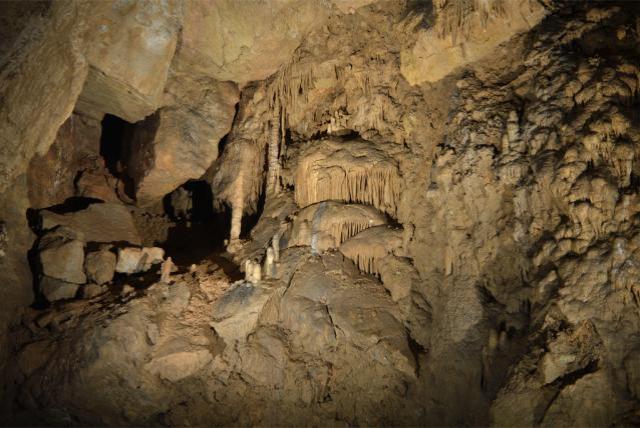
According to Act LIII of 1996 on the Protection of Nature, certain special formations of non-living natural values in Hungary are protected by law ex lege. In this sense, all caves are protected natural values, and all springs, sinkholes, earthmounds and earth fortresses are protected natural areas (natural monuments).
The law also provides for the possibility of declaring as protected by individual legislation a number of other non-living natural values worthy of preservation. Such can include geological formations and basic stratigraphic profiles, minerals, mineral associations, fossil remains and their sites, surface formations, soil sections as well as artificial cavities.
From the 1950s onwards, a number of sites have been added to our list of protected areas, which were designated as protected areas in order to strictly protect the special geological or surface formations found there. These include, to mention just the most famous, the Ipolytarnóc fossil site, the Vértesszőlős archaic human find site, the rock formations of the Úrkút karst, the limestone layers of the Kálvária hill in Tata, the ’hive stones’ of Szomolya at the Bükk foothills, or the basalt volcanic crater of the Ság hill at Celldömölk.
In 2007, another group was added to the list of natural values protected by individual legislation independently of territorial protection: by Decree 21/2007 (20.VI.) of the Ministry of Agriculture and Forestry, examples exceeding a certain size range of 11 rare and endangered Hungarian minerals were declared to be protected.
Some of our larger protected areas of complex nature conservation importance (national parks, landscape protection areas, and nature reserves) contain many outstanding non-living natural values too. Everybody knows, for example, the basalt extinct volcano mountains of the Tapolca Basin in the Balaton-Uplands National Park, the geyser cones of the Tihany peninsula or the rock fields of the Kál basin. However, the conservation management of protected areas must also include the preservation of less obvious lifeless values. Among the thematic research programmes designed to lay the foundations for this, the survey and recording of geological stratigraphic profiles in protected areas of national importance, which are the type-locations of diverse rock formations from different periods of geological history, was completed in 2007.
(Source: termeszetvedelem.hu)