


South-Mezőföld Landscape Protection Area
South-Mezőföld Landscape Protection Area was created in 1999 through the merger of several protected sites and some others planned to become protected along the border of Tolna and Fejér counties.
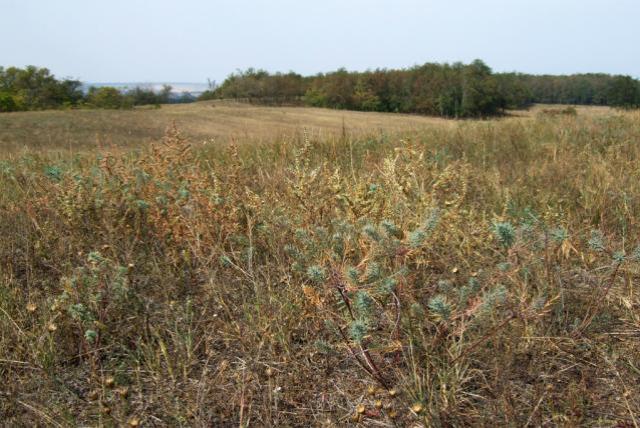
Formation
The natural values and morphological features of the area are determined by the thick layer of loess accumulated during the Ice Age. Over the millennia, the dust, which has been compacted and in many places turned to rock, has formed strange relief forms. In the south, this area continues in sandy soils left over as sediment from the Ős-Sárvíz and the Danube. In the Tengelic sandy area and the Paks Ürge Field, sand hummocks similar those found in the Kiskunság have formed. Because of the climate similar to that of the lowlands, and due to the aforementioned soil structure, the South-Mezőföld is an area with poor water supply.
Flora
Natural plant associations of the area are sandy grassland, sandy pastures, drying marshes and loess grasslands, interspersed with lily-of-the-valley oak woods, oak-hornbeam forests and alder bogs. Almost every smaller area unit has its own outstanding botanical and natural value. There are 10 species of orchids alone, and in some places there are masses of marsh gentian and Siberian iris. There is also a significant population of the highly protected wild kale Crambe tatarica and the rare Ice Age relict buttercup, the globeflower. Our native saffron, Crocus reticulatus, also deserves to be mentioned. It is not a species that has descended from the surrounding high mountains, but instead, it extends into the Carpathian Basin from its southern habitats, and has two major populations in the protected area.
Fauna
As regards the fauna, the South-Mezőföld is an important habitat for a number of protected and strictly protected bird and bat species. Rare birds of the marshes include the common grasshopper warbler and the corncrake, while on the sandy grasslands, tawny pipets or colourful bee-eaters hunt for insects. One of the best-known rodents in the area is the ground squirrel, which is also protected. As a result of a recent reintroduction programme, its population has increased considerably. Its natural predators include birds of prey that nest in the landscape protection area, of which the saker falcon is most notable, being quite rare in the country. The watercourses and lakes are home to amphibians and songbirds that prefer reedbeds, but also it is here that western marsh harriers find breeding sites and the strictly protected otters can establish their hunting territories.
Tourism
Within the landscape protection area it is possible to hike on marked hiking trails or on our study trails. The information material for the Ürge Study Trail and the Cikta Study Trail can be downloaded from our website. Duna-Drava National Park Directorate provides guided tours for groups in the protected areas upon prior arrangement.