


West-Mecsek Landscape Protection Area
Declared in 2009, the West-Mecsek Landscape Protection Area covers 10,315 hectares, located in the area between the settlements Pécs, Abaliget, Bükkösd and Cserkút.
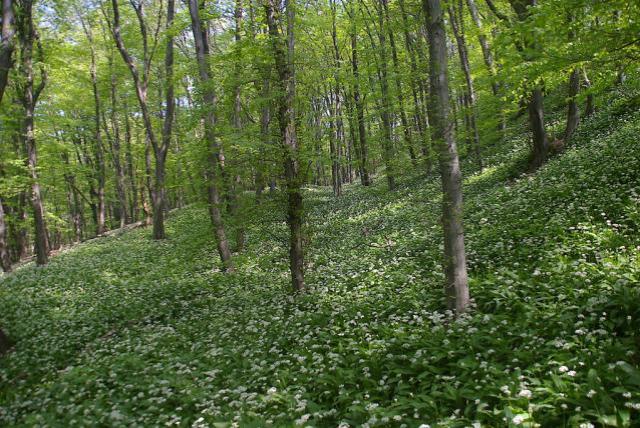
It includes several previously established nature conservation areas, such as the Jakab Hill Nature Reserve, Melegmány Valley, Pintér Garden Arboretum, the surface area of the Abaliget Cave and the Kőszeg Spring Forest Reserve. Among protected natural areas of local importance, the most important is the Pécs Parkland Woods, which area has also become part of the new landscape protection area. Among the geological values, Jakab Hill and its surroundings, located in the south-western part of the landscape protection area, and composed mostly of Early Triassic and Permian sedimental rocks like sandstone, aleurolite and conglomerates, are of particular geological interest. The steep southern slopes are characterised by the spectacular morphological features of the conglomerate outcrop towers, the “Babás szerkövek” figural structures, and the natural outlook point of Zsongorkő. On the north-facing areas the West Mecsek karst region is found, which is mainly composed of well karstified Middle Triassic limestone, covered on substantially large expanses by glacial loess. Rich in surface karst phenomena (sinkholes, karst windows, springs), the area is also home to a series of calcareous tuff cascades in the Melegmány and Nagy-mély valleys. Of the more than 200 caves in the area, 5 are strictly protected, the longest and best known being the Abaliget cave, which is about 1.5 km long and has been made accessible for tourists.
Flora
The flora of the area shows sub-Mediterranean effects, as indicated by the common occurrence of protected plants such as black bryony or butcher’s broom. Typical forest types are pubescent oak-manna ash bush forests on arid southern slopes, mostly Illyrian oak-hornbeam forests on the hilltops, and beech woods on the northern slopes and in cool valleys. Smaller rocky grassland patches on the southern sides, and wet hayfields at the northern foothills add to the diversity of habitats. Among the special values of the flora, a number of orchid species native to Hungary can be noted including the monkey orchid, bee-orchid, woodcock bee-orchid, Janka’s lizard orchid, to mention only a few, and other types of plants too, like a hybrid leopard’s bane species endemic here, or alpine woundwort.
Fauna
The fauna is also represented by a number of protected species. Among the arthropods, we should mention the Hungarian bush cricket, which is typical of grasslands, the Mecsek autumn caddisfly occurring in the valleys of the karstic region, and the dragonfly species called Balkan goldenring. The bird fauna is dominated by species of broad-leaved forests, including the rare and valuable grey wagtail and the red-breasted flycatcher, but the strictly protected corncrake may also be present in wet hayfields of the foothills. Among the mammal species, there is an outstanding number of bat species, due to the presence of numerous caves and cavities (e.g. Geoffroy’s bat, lesser and greater horseshoe bats). There is a thematic exhibition in Abaliget (Bat Museum), telling about the life of bats.
In addition to the conservation of the protected and rare species and associations currently found in the area, the aim of the designation of the protected area was to ensure that land management and farming within the landscape conservation area is shifted into a more nature-friendly direction. In order to achieve this, we are calling for the replacement of the clear-cutting way of forestry management with methods that ensure permanent forest cover, and also for the conservation of caves. Because the protected area borders a large city where there is a strong demand for outdoor activities, we seek to educate about the values of the area in a way that respects nature, in particular by promoting hiking and by creating study trails. This education focuses not only on natural assets, but also on cultural and historical values, just like in the case of the restoration of the ruins of the Pauline monastery on top of Jakab-hill.